Choosing a dependable Factory Faucet Handle manufacturer involves more than comparing prices or browsing polished product photos. Buyers need to understand how handles are designed, produced, inspected, and matched with compatible faucet systems. A handle may look elegant on a showroom display, yet feel loose after installation or show uneven plating under bright bathroom lights.
A practical perspective comes from Ethan Liu, a fictional manufacturing specialist created for this introduction: “A faucet handle earns trust through consistent fit, finish, and movement—not appearance alone.” This is an illustrative quotation, not a verified statement from a real expert. The principle still points buyers toward useful questions. Ask about material options, dimensional checks, surface-finish inspection, and testing of handle movement. Request samples when possible. Small details matter.
Suppliers may offer different handle shapes, finishes, production capabilities, and customization services. Compare those details against your product design, target market, and expected order volume. Clear drawings and written specifications can reduce misunderstandings before production begins. Ask how the factory handles sample approval, batch consistency, packaging, and quality concerns. Do not assume every supplier uses the same inspection process.
There is no perfect checklist. Some details only become clear after sample evaluation, and that takes time. This guide introduces China’s faucet handle manufacturing landscape and explains how buyers can assess manufacturers and suppliers with greater care. It focuses on practical selection criteria, not sweeping promises. A thoughtful review can help buyers find a partner whose capabilities fit their requirements.
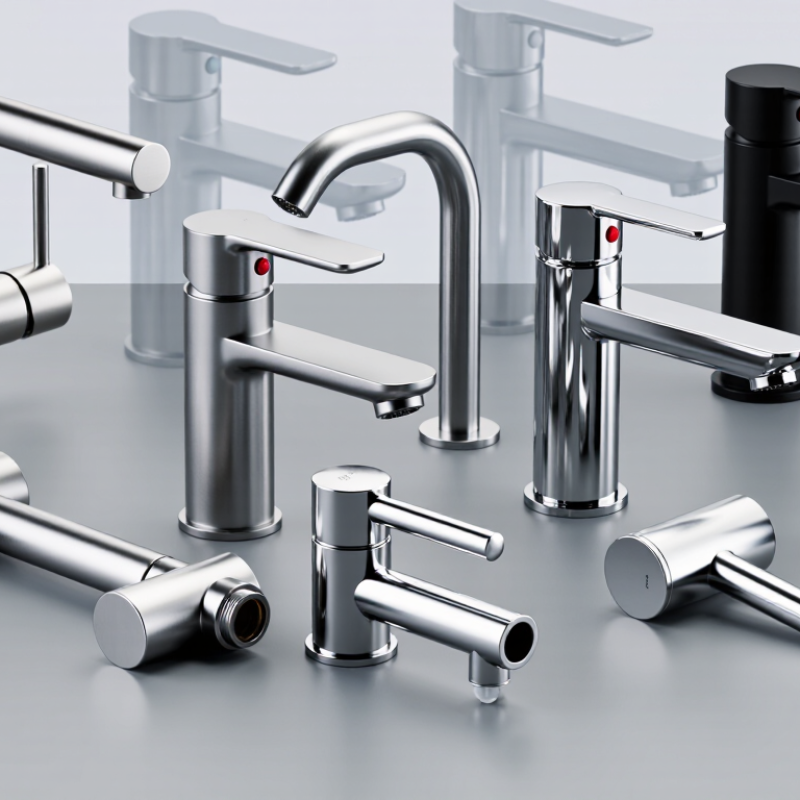
Faucet Handles: Functions, Components, and Design Basics
A faucet handle does more than complete the look of a tap.
It lets users adjust water flow and, on many models, temperature. Single-lever handles move in more than one direction, while separate handles usually control hot and cold water independently. Small movements matter. A loose or awkward handle can make precise adjustment frustrating, even when the faucet itself works properly.
Behind the visible grip, a handle connects to a valve cartridge or stem that regulates water. Its hub, fixing screw, and any cover plate help secure the assembly and conceal the connection. Designs vary, so handle shapes are not always interchangeable. Before replacement, check the valve type, fitting size, and screw position. This step is easy to overlook. It can save time, though product specifications may not show every fitting detail clearly.
Good handle design balances grip, clearance, and appearance. A broad lever can be easier to operate with wet hands, but it needs room to move without striking a wall or backsplash. Rounded edges feel comfortable; sharp decorative contours may not. Finishes should suit the faucet and tolerate regular cleaning, yet appearance alone says little about long-term performance. A useful factory check includes smooth movement, secure fastening, and consistent alignment. Even then, the real test is how the handle feels in daily use.
Common Faucet Handle Types and Manufacturing Materials
Faucet handle types influence control, comfort, and the overall feel of a tap. Single-lever handles adjust water flow and temperature with one hand, making them practical in busy kitchens. Cross handles turn separately and suit designs where users prefer distinct hot and cold controls. Knob handles take up little space, but can be harder to grip with wet hands. A handle should feel steady, with no sharp edges or excessive play.
Manufacturers commonly use brass, zinc alloy, stainless steel, and engineering plastics. Brass is easy to machine and offers a solid feel; stainless steel resists corrosion, though its finish still needs proper care. Zinc alloy can support detailed shapes, but its coating quality matters. Plastic handles are lightweight and may suit budget models, yet their durability depends on material grade and wall thickness. In production, casting or forging forms metal bodies, followed by machining, polishing, and surface finishing. Even a neat finish can hide inconsistent internal tolerances, so inspection matters.
Tips: Ask suppliers about material grades, coating thickness, and cycle testing. Request samples and check handle movement yourself. A smooth sample is useful, but it does not prove every production batch will match.
Common Faucet Handle Materials: Approximate Density
Faucet handles are commonly made from metals such as brass, stainless steel, zinc alloy, and aluminum, as well as plastics such as ABS. Bars show representative material densities in g/cm³; actual values vary by alloy grade and formulation. Density alone does not determine suitability, which also depends on factors such as corrosion resistance, strength, finish, and cost.
China’s Faucet Handle Manufacturing Industry and Key Regions
China’s faucet-handle manufacturing base is clustered around established plumbing and metalworking districts. Zhejiang’s Ningbo, Taizhou, and Wenzhou regions support casting, precision machining, polishing, and component sourcing. In Guangdong, Kaiping and Foshan bring suppliers, assembly workshops, and finishing services closer together. This local network can shorten production handoffs. It can also make supplier capabilities uneven.
The National Bureau of Statistics reported that manufacturing value added among enterprises above designated size grew 5.0% in 2023. This is a broad industrial indicator, not faucet-handle output, so it should not be read as product-specific growth. That distinction matters. For buyers, regional reputation is only a starting point: check handle fit, surface consistency, and batch-to-batch dimensions. Ask how the factory tests finishes and records inspection results. Small details show up quickly. A handle with a rough underside or loose spline can undermine an otherwise clean installation. The map is not perfectly tidy; factories may outsource plating or machining, even within major clusters. A careful supplier review should therefore follow the actual production route, not just the factory address.
China Top Factory Faucet Handle Manufacturers and Suppliers - China’s Faucet Handle Manufacturing Industry and Key Regions
| Region |
Established Manufacturing Cluster |
Industry Context |
Typical Faucet Handle Products and Processes |
Sourcing Considerations |
| Guangdong |
Kaiping, including Shuikou Town |
A well-known plumbing and sanitary-ware manufacturing area with an established network of component, finishing, and assembly suppliers. |
Lever and knob handles; metal casting and machining; surface finishing; handle components supplied for a range of faucet designs. |
Confirm compatibility with the faucet cartridge and stem, finish consistency, corrosion-resistance requirements, and export documentation. |
| Zhejiang |
Taizhou, including Yuhuan |
A major base for valves and plumbing hardware, supported by related metalworking and component supply chains. |
Machined or cast handle parts, lever handles, and components designed to work with faucet bodies, stems, and cartridges. |
Specify drawings, dimensions, material grade, tolerances, operating-cycle expectations, and the intended valve or cartridge interface. |
| Fujian |
Nan’an and surrounding areas |
A recognized plumbing and building-materials production area with suppliers serving domestic and export markets. |
Faucet handle assemblies and related plumbing hardware; product options depend on the supplier’s tooling and finishing capabilities. |
Request samples and verify material composition, dimensional fit, finish specifications, packaging, and batch inspection procedures. |
| Zhejiang |
Ningbo and nearby manufacturing areas |
A broad manufacturing and export ecosystem that includes hardware, metal products, and sanitary-ware supply chains. |
Handle components and finished assemblies in multiple shapes and finishes, subject to individual production capabilities. |
Clarify whether the supplier makes the handle in-house or sources components externally, and agree on inspection and delivery requirements. |
Common Product and Material Considerations
| Dimension |
Common Options |
What Buyers Should Specify |
| Handle style |
Lever, knob, and cross handles |
Overall dimensions, mounting method, stem connection, and compatibility with the faucet cartridge. |
| Material |
Brass, zinc alloys, and stainless steel are used in faucet components; material choice varies by design and application. |
Request the exact material specification and, where relevant, supporting material or compliance documentation. |
| Surface finish |
Polished, plated, brushed, and coated finishes, depending on the product and process. |
Define the finish reference, color tolerance, surface-quality criteria, and applicable durability tests. |
| Quality checks |
Dimensional inspection, appearance checks, assembly-fit checks, and finish testing as agreed with the supplier. |
Set acceptance criteria, sampling plans, packaging requirements, and pre-shipment inspection arrangements before production. |
Regional profiles describe established manufacturing ecosystems, not market-share rankings. Production capabilities and product specifications vary by supplier and should be verified directly.
How to Evaluate Chinese Faucet Handle Manufacturers and Suppliers
China Top Factory Faucet Handle Manufacturers and Suppliers
How to Evaluate Chinese Faucet Handle Manufacturers and Suppliers
Evaluate the factory, not just the polished sample. Ask for drawings, alloy specifications, coating details, and batch-level inspection records. A supplier should explain how it checks handle fit, torque, and repeated operation. Request test results for the exact finish you plan to order; a generic certificate is not enough. I would inspect a production sample, too. Small gaps can matter.
Use measurable references when comparing claims. The U.S. EPA’s WaterSense Specification for Bathroom Sink Faucets sets a 1.5-gallon-per-minute flow limit for qualifying faucets and includes performance requirements. This is a faucet-level benchmark, not a handle test, but it shows why suppliers should provide evidence for measurable performance claims. For corrosion checks, ask whether testing follows a recognized method such as ISO 9227, and confirm the test duration and sample condition. The method alone does not prove long-term field life.
Check traceability and repeatability before discussing price breaks. Ask how incoming metal is identified, how plating thickness is measured, and what happens when an inspection fails. Compare pilot-run parts with later production, including color, edge feel, and movement under load. Video calls help, but they cannot replace independent inspection for a large order. One weak point: paperwork can look complete while process control remains uneven, so verify the details against real parts.
Quality Standards, Customization, and Export Considerations
When comparing China-based faucet handle manufacturers and suppliers, look beyond a polished sample. Ask how they control dimensions, surface finish, and fit across production batches. A handle should attach securely to its valve stem without wobble or excessive force. Small details matter. Request material specifications and test records, including checks for coating adhesion and corrosion resistance where relevant. Agree on inspection criteria before placing an order.
Customization may cover handle shape, surface texture, color, markings, and packaging. Provide drawings with tolerances, not just a reference photo. A prototype can reveal sharp edges, awkward grip, or a finish that looks different under warm light. It is not a guarantee of mass-production consistency. Confirm sample approval procedures and how design changes are documented. One awkward point: extra customization can increase tooling costs and lead time, even when the change seems minor.
For export orders, confirm carton dimensions, protective inserts, labeling, and shipping documents with the supplier. Ask whether cartons can withstand stacking and moisture during transit. Check destination-market requirements with qualified import or compliance professionals; requirements can differ by product and market. Share a written delivery schedule, inspection plan, and process for reporting defects. Clear records help, though they cannot prevent every delay. A realistic buffer is often wiser than a perfect-looking schedule.
Conclusion
This guide introduces the functions and basic components of faucet handles, explaining how their design affects water control, comfort, and compatibility with different faucet systems. It compares common handle styles and manufacturing materials, highlighting how choices such as metal or engineered materials can influence durability, appearance, and maintenance. The article also outlines China’s faucet handle manufacturing landscape and the role of key production regions in serving domestic and overseas buyers.
For buyers seeking a Factory Faucet Handle supplier, the guide offers practical ways to assess manufacturers, including production capabilities, material control, communication, and quality inspection processes. It also discusses customization options, relevant quality standards, and export considerations such as packaging, product specifications, and order coordination. Together, these topics help purchasers compare suppliers and select faucet handles that meet their design, performance, and sourcing requirements.

 Huazhu