Choosing the best Sink Faucet Handle from China requires more than comparing polished photos and low prices. A handle is the daily contact point between the user and the water system. Its shape, coating, cartridge, and mounting fit affect comfort, durability, and maintenance.
Industry evidence supports a careful approach. The U.S. Environmental Protection Agency’s WaterSense program emphasizes efficient faucet performance, leak prevention, and verified testing. Although its labeling mainly covers bathroom faucets, the principle remains useful for kitchen selection. Grand View Research’s kitchen fixtures analysis also identifies renovation, water efficiency, and modern design as important market drivers. These trends matter when evaluating Chinese manufacturers, especially those supplying export markets.
Look closely at the details. A zinc alloy handle may feel solid, yet stainless steel often offers stronger corrosion resistance in humid kitchens. Ceramic cartridges usually provide smoother control and longer service life. Check whether the handle matches the faucet cartridge, hole spacing, and installation method. Ask for material specifications, salt-spray results, cycle testing, and compliance documents. ISO 9001 certification can support process reliability, but it does not automatically prove every product is excellent.
The cheapest option can look clever. It often is not.
Real selection also includes factory experience. Review production photos, inspection records, warranty terms, and replacement-part availability. Request a sample before placing a large order. Test it with wet hands. Turn it repeatedly. Notice stiffness, wobble, sharp edges, and uneven plating. This small test may reveal more than a catalogue.
A strong supplier should explain limitations honestly. That is a useful sign. The best choice balances verified performance, practical design, consistent quality, and total ownership cost, rather than chasing the lowest quotation.
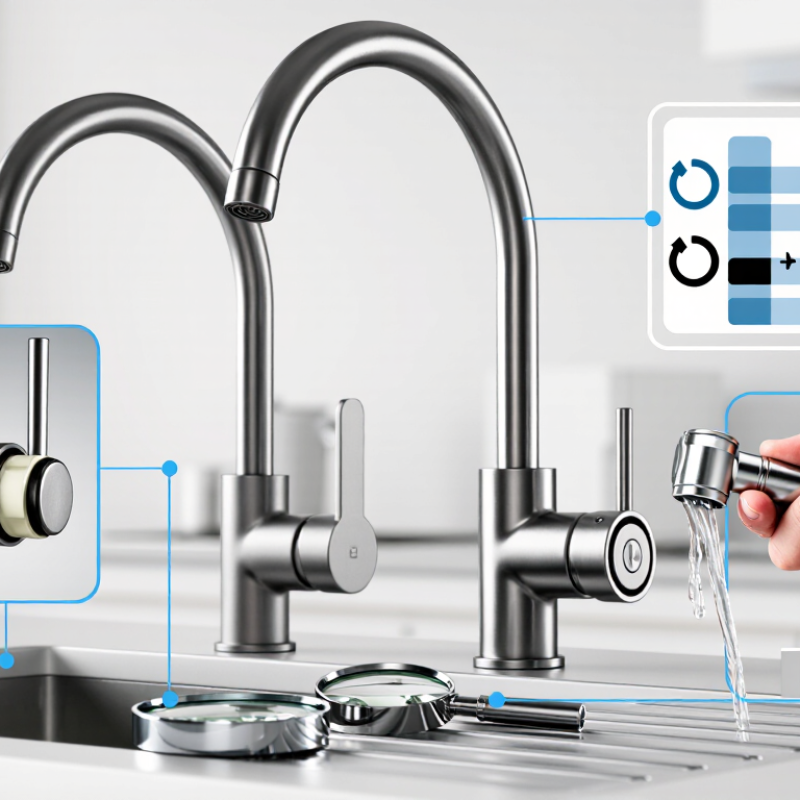
China Best Sink Faucet Handle How to Choose?
A sink faucet handle controls water flow and temperature. It is the part your hand touches most often. A comfortable handle should move smoothly without wobbling or scraping the faucet body. Single handles adjust temperature quickly, while two handles offer more precise hot and cold control. Your choice depends on sink space, household habits, and installation conditions.
In practical use, a handle with a textured surface helps when hands are wet or soapy. Metal construction usually feels solid, but a well-made reinforced composite handle can also perform reliably. Check the cartridge type, handle clearance, and mounting size before buying. These details prevent awkward installation and early leaks. I once chose a handle by appearance alone. It looked excellent, but the short lever was difficult to operate near the backsplash. That mistake changed my checking process.
Tips: Test the handle with one finger. Look for steady movement and no sudden resistance. Measure the distance behind the faucet. Ask for material specifications and replacement-part information. A clear warranty also indicates better supplier responsibility. Do not assume a heavier handle is always stronger. Some heavy parts feel durable but place extra stress on the cartridge. A small detail, yet important.
| Handle Type | How It Works | Main Advantages | Potential Limitations | Best Use | Typical Selection Rating |
|---|---|---|---|---|---|
| Single-Lever Handle | One lever controls water flow and temperature, usually by moving up or down and side to side. | Easy one-handed operation; quick temperature adjustment; requires less counter space than two separate handles. | One internal cartridge controls both functions, so cartridge wear may affect flow and temperature control. | Most modern kitchens, utility sinks, and accessible-use installations. | ★★★★★ |
| Two-Handle Faucet | Separate hot- and cold-water handles control the supply independently. | Precise hot and cold adjustment; traditional appearance; a worn side can often be serviced separately. | Requires both hands for some adjustments and normally needs more installation space. | Traditional kitchens, laundry rooms, and users who prefer separate temperature control. | ★★★★☆ |
| Cross Handle | A cross-shaped handle rotates a valve stem to open or close the water supply. | Distinctive traditional style; provides a firm grip; suitable for classic or heritage-inspired designs. | May require more turning effort than a lever, especially for users with limited hand strength. | Decorative bathrooms, traditional kitchens, and restoration-style interiors. | ★★★☆☆ |
| Knob Handle | A rounded knob is turned to regulate water flow, temperature, or both depending on the faucet design. | Compact shape; simple appearance; available in many decorative forms. | Can be harder to operate with wet or soapy hands; gripping comfort depends strongly on the surface design. | Compact sinks and designs where a small visual footprint is preferred. | ★★★☆☆ |
| Touchless Sensor Handle | An electronic sensor activates water flow without direct contact; a manual control may still be provided for temperature setting. | Reduces contact with the handle; convenient during food preparation; can help limit transfer of dirt to the faucet surface. | Needs batteries or another power source; sensor performance can be affected by installation conditions and cleaning requirements. | Hygiene-focused kitchens and high-frequency hand-washing areas. | ★★★★☆ |
| Pull-Out or Pull-Down Control | The faucet head extends from the spout, while a lever or button controls water flow and spray mode. | Improves rinsing flexibility; useful for cleaning large cookware and reaching different areas of the sink. | Hose, docking, and spray-switch components require proper maintenance; the handle must remain comfortable during frequent use. | Single-bowl kitchen sinks and food-preparation areas. | ★★★★★ |
It controls water flow and temperature. The handle is touched frequently, so comfort and smooth movement matter.
Single handles adjust temperature quickly. Two handles provide more precise hot and cold control. Your sink space matters.
A textured surface improves grip when hands are wet or soapy. Smooth surfaces may feel less secure.
Metal usually feels solid. Reinforced composite can also work reliably. Heavier does not always mean stronger.
Measure mounting-hole spacing, deck thickness, handle clearance, and the distance behind the faucet. Small errors can cause installation problems.
Single-hole faucets need one opening. Centerset models fit common three-hole sinks. Widespread and wall-mounted types need different layouts.
Handles around 90 to 120 millimeters often feel balanced for kitchen use. Check nearby walls, cabinets, and the backsplash.
Move it with one finger. Look for steady movement without wobbling, scraping, or sudden resistance. That simple test helps.
Ask for material details, cartridge information, replacement parts, fixing components, and warranty terms. Clear information shows responsibility.
Not safely. I once chose a short, attractive lever that struck the backsplash. The mistake changed my checking process.
Choosing the best Sink Faucet Handle in China requires more than focusing on appearance. The handle is the main point of daily control, affecting water flow, temperature adjustment, comfort, and overall sink usability. Consider whether a lever, cross, or specialized design suits your habits, available space, and sink style. A well-matched handle should be easy to operate, stable, and comfortable for frequent use.
When comparing options, evaluate the material, surface finish, corrosion resistance, and expected service life. The handle size should match the faucet body and installation area, while the connection method must be compatible with the existing valve or cartridge. For purchasing from China, quality control, production consistency, customization capability, packaging, communication, and supplier reliability are also important. The best choice balances practical design, durable construction, easy installation, and dependable supplier support rather than relying on appearance alone.

 Huazhu