Global sourcing of faucet handles is not just a price comparison. Buyers must assess material consistency, finish durability, dimensional fit, production capacity, and communication across time zones. Small details matter. A handle that looks identical in a catalog may feel different in hand, sit loosely on a cartridge, or show scratches after repeated cleaning.
Reliable data helps set practical requirements. The U.S. EPA’s WaterSense specification states that labeled bathroom sink faucets use no more than 1.5 gallons per minute, compared with the 2.2-gallon-per-minute federal maximum for standard faucets. That benchmark concerns water flow, not handle quality, but it shows how product specifications shape purchasing decisions. UN Comtrade classifies taps, cocks, and valves under HS 8481; this broad category does not isolate faucet handles. That limitation matters when comparing trade figures or supplier claims.
This guide to Top Faucet Handle Suppliers for Global Sourcing focuses on evidence buyers can check: published material options, finish samples, inspection procedures, documented lead times, and clear responses to technical questions. When you Source Faucet Handle products, ask for dimensional drawings and sample pieces before approving a large order. Request test details, too. A polished brochure is useful, but it is not proof of consistent production. Even careful sourcing has gaps; sample quality may not fully represent a later batch. Recognizing that risk—and planning incoming inspections—makes supplier selection more dependable.
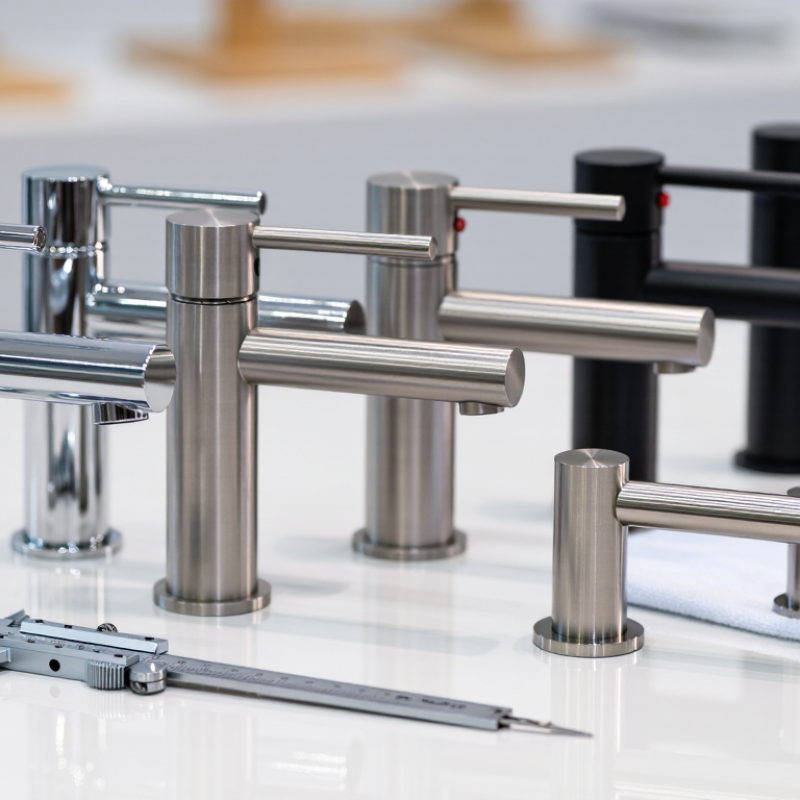
Faucet handles affect comfort, access, and the way a fixture fits a room. Lever handles are easy to operate with a wet hand and suit many everyday sinks. Cross handles offer a familiar grip, though their shape can collect water around the center. Knobs take less space, but may be harder to turn for some users. Small details matter.
For global sourcing, match the handle type to the valve design, mounting method, and intended market before requesting quotes. Ask suppliers for material details, finish samples, dimensional drawings, and clear packing specifications. A polished sample can look convincing under showroom lights; inspect it in ordinary indoor light, too. Check whether the finish appears even around edges and joints. Confirm that replacement parts and installation instructions are available. Lead times, minimum order quantities, and shipping protection can vary, so compare them alongside unit price. One easy mistake is assuming that similar-looking handles fit the same valve. They may not. A written compatibility check helps prevent costly surprises, though it cannot replace testing a sample with the actual assembly.
A practical comparison of common faucet handle configurations and the technical details buyers should confirm when sourcing components internationally.
| Handle Type | Typical Materials | Control and Valve Compatibility | Common Applications | Key Sourcing Checks |
|---|---|---|---|---|
| Single-lever handle | Zinc alloy, brass, stainless steel, or engineered plastic; finishes may include chrome plating or powder coating. | Usually operates a single-control cartridge that regulates flow and temperature. Cartridge stem shape and handle attachment must match. | Kitchen faucets, bathroom basin faucets, and many shower controls. | Confirm cartridge model, stem dimensions, attachment method, rotation range, finish, and clearance from the faucet body or backsplash. |
| Two-handle lever set | Commonly brass, zinc alloy, stainless steel, or engineered plastic, often with a plated or coated finish. | Separate hot- and cold-water handles typically connect to individual valve stems or cartridges. | Traditional basin faucets, kitchen faucets, and widespread faucet sets. | Check hot/cold orientation, stem interface, handle height and reach, included fasteners, and whether the set is intended for the specified faucet layout. |
| Cross handle | Often brass or zinc alloy; some designs use stainless steel or plastic components. | Generally fitted to a valve stem or cartridge through a matching spline, broach, or other specified connection. | Traditional-style basin, bath, and shower fixtures. | Request the stem interface drawing and measurements, including spline or broach details; verify the handle clears nearby trim and suits the intended valve. |
| Round knob handle | Brass, zinc alloy, stainless steel, or engineered plastic, with a range of plated, painted, or coated finishes. | May control a separate valve stem or operate a cartridge, depending on the faucet design. | Compact bathroom faucets, utility fixtures, and traditional-style fittings. | Assess grip, knob diameter, attachment hardware, stem compatibility, finish consistency, and ease of operation in the intended installation. |
| Wrist-blade handle | Typically metal or engineered plastic; surface finishes depend on the product specification. | May be designed for a particular faucet stem, cartridge, or clinical-style faucet assembly. | Healthcare, laboratory, food-service, and other settings where extended handle contact may be useful. | Confirm the blade dimensions, operating travel, mounting interface, cleaning requirements, and any accessibility or sector-specific requirements applicable at the destination. |
| Replacement handle | Material varies; commonly metal or engineered plastic, selected to match the existing faucet and required finish. | Must fit the existing valve stem, cartridge, or handle adapter. Appearance alone does not establish compatibility. | Repair, maintenance, and refurbishment projects. | Provide the supplier with stem measurements, interface details, photographs, finish requirements, and the faucet’s technical documentation where available. |
Global sourcing note: Material declarations, product testing, labeling, and plumbing requirements vary by destination market and product category. Confirm the applicable requirements with the importer or relevant authority, and approve a production sample before placing a large order.
Lever handles are easy to operate with wet hands. Cross handles offer a familiar grip but can collect water around the center. Knobs save space, though some users may find them harder to turn.
Match the handle to the valve design, mounting method, and intended market. Ask for material details, dimensional drawings, finish samples, and packing specifications. Similar-looking handles may not fit the same valve.
Check it in ordinary indoor light, not only under showroom lighting. Look closely at edges and joints for uneven coating. Photos are not enough.
Request current test reports, material declarations, and inspection records. Check that each document names the product, test method, laboratory, date, and model. Confirm regional requirements with qualified local experts.
Put each offer into the same specification sheet. Record material, finish, stem interface, tolerances, carton quantity, and lead time. Ask for a landed-cost breakdown, including packaging, replacement parts, and tooling.
Request a pre-production sample, first-article inspection, and pre-shipment inspection. Check handle movement, coating thickness, fit, and visible defects under consistent lighting. Retain an approved sample for comparison.
Ask whether production depends on one plating facility or undisclosed subcontractors. Confirm replacement-part lead times and backup plans. Even careful audits miss things. That gap is real.
Assign clear contacts for engineering changes and urgent issues. Require written approval before production revisions, and track delivery dates and defect rates. A spreadsheet can miss context, so review results with the supplier, too.
Selecting the right faucet handle supplier for global sourcing begins with understanding the intended handle type, materials, finish, and installation requirements. Buyers should compare suppliers on manufacturing experience, production capacity, customization options, communication, lead times, and pricing—not price alone. Regional manufacturing strengths can influence access to specialized processes, skilled labor, and efficient logistics, so supplier capabilities should be assessed against the needs of each project.
Before placing an order, review product samples, quality-control procedures, relevant certifications, and the supplier’s ability to maintain consistent specifications. Consider risks such as material shortages, shipping delays, and limited production flexibility, and discuss practical ways to manage them. A clear proposal comparison, written expectations, and regular communication help build dependable partnerships. To Source Faucet Handle products effectively, balance quality, compliance, cost, and supply reliability throughout the sourcing process.

 Huazhu