How to Choose a Single Faucet Handle in 2026?

Time:2026-10-12 Author:Liam
0%

Choosing a Single Faucet Handle in 2026 requires more than matching chrome with a countertop. A handle should feel stable, turn smoothly, and control water temperature without awkward wrist movement. Picture a wet hand reaching for the lever beside a deep kitchen sink. Small details matter.

Industry evidence supports a practical approach. The U.S. Environmental Protection Agency’s WaterSense program states that certified bathroom faucets use no more than 1.5 gallons per minute. They can reduce flow by more than 30% compared with standard 2.2-gallon-per-minute models. This makes flow performance an important buying test, not merely a marketing phrase. The National Kitchen & Bath Association’s design research also continues to emphasize usability, durable finishes, and streamlined fixtures in modern renovations. These findings suggest that appearance should work with maintenance and daily comfort.

A dependable Single Faucet Handle should match the sink configuration, mounting surface, water pressure, and household habits. Check whether the cartridge is ceramic, whether replacement parts are available, and whether the spout reaches the basin center. A low-profile lever may suit a compact vanity, while a longer handle can offer better control near a busy kitchen sink. Finish samples can mislead under showroom lighting. View them beside your actual tile and cabinet color.

There is no perfect handle.

Even experienced buyers can overlook installation clearance or cleaning effort. A thoughtful choice balances evidence, tactile experience, warranty support, and realistic maintenance. This guide explains how to compare those factors before purchase.
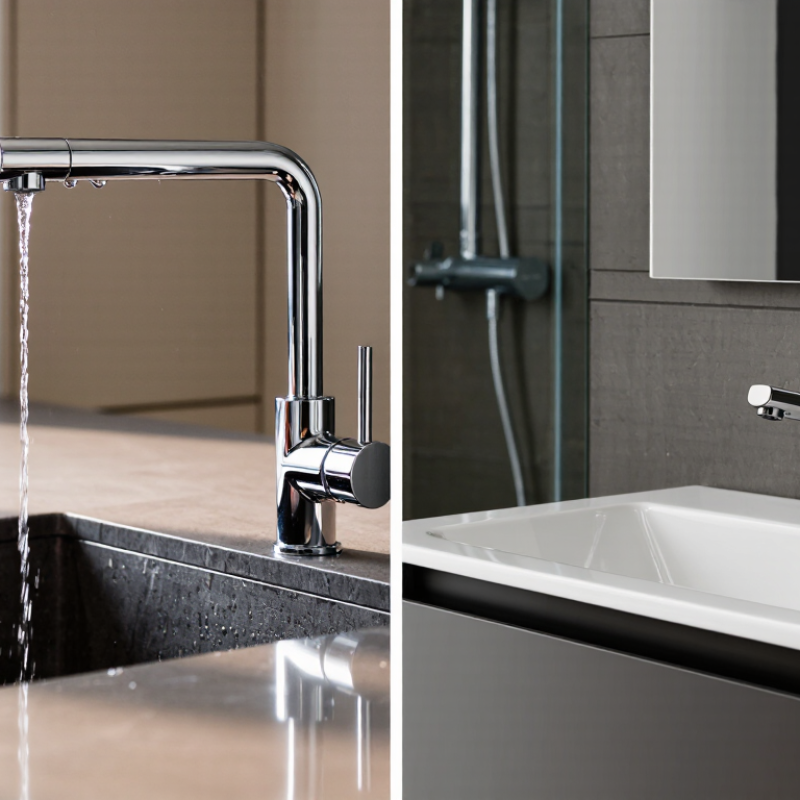
How to Choose a Single Faucet Handle in 2026?

Understand Single-Handle Faucet Types and Their Key Features

How to Choose a Single Faucet Handle in 2026?

A single-handle faucet controls water temperature and flow with one lever. This design is practical beside a busy kitchen sink. I have found that lever resistance matters more than glossy appearance. A smooth movement feels safer when hands are wet. Test it slowly. Some handles look elegant but feel awkward against a backsplash.

Single-handle faucets usually use ceramic disc, cartridge, or ball valve technology. Ceramic disc valves often provide precise control and resist dripping when properly installed. Cartridge models are easier to service because replacement parts are usually straightforward to identify. Ball valves offer flexible movement, but their internal seals may need closer inspection over time. No mechanism is perfect. Water quality and installation accuracy affect performance.

Spout style also changes daily use. Pull-down models suit deep sinks and direct water neatly into tall pots. Pull-out models provide wider movement and can reduce splashing near shallow basins. A high-arc spout creates useful clearance, though it may increase splash in a small sink. Check the faucet’s mounting holes, supply connections, and stated flow rate before buying. An integrated aerator can soften the stream and reduce wasted water without making washing feel weak. I once underestimated handle reach and regretted it. Measure the counter area, not just the sink opening.

Measure Your Sink and Confirm Mounting Compatibility

A single-handle faucet starts with measurements, not appearance. Measure the sink deck from front to back, then check its thickness beneath the counter. Record the existing hole count and spacing. One central hole supports many single-handle designs, while three holes may require a matching cover plate. A common three-hole spread is 4 inches, but older sinks can vary. Measure twice.

Check the faucet’s mounting diagram before ordering. The shank must pass through the deck, gasket, and retaining nut without running out of thread. Confirm the maximum deck thickness, supply-line length, and clearance behind the handle. A backsplash can block movement, even when the faucet technically fits. I have seen this mistake in real replacements. It is easy to miss.

Industry data supports careful flow-rate checks. The U.S. Department of Energy sets a 2.2 gallons-per-minute baseline for standard kitchen faucets at 60 psi. The U.S. Environmental Protection Agency’s WaterSense specification limits bathroom faucets to 1.5 gallons per minute, about 30% below that baseline. Do not assume the bathroom figure applies to every kitchen model. Also verify the connection size and certification under ASME A112.18.1/CSA B125.1. Product listings sometimes omit important dimensions. That is frustrating, and worth questioning. A paper template taped over the sink can reveal handle, spout, and backsplash conflicts before installation.

How to Choose a Single Faucet Handle in 2026? — Measure Your Sink and Confirm Mounting Compatibility
Step Measurement or Check How to Measure or Identify It What to Confirm Before Buying Selection Guidance
1 Number of sink or countertop holes Look underneath the sink or remove the existing faucet escutcheon. Count the openings used by the faucet and accessories. A single-handle faucet may be installed in a one-hole sink. A three-hole sink may require a compatible deck plate or an approved cover solution. One hole: direct fit
Three holes: verify deck plate
2 Mounting-hole diameter Measure the inside diameter of the faucet opening with a ruler or caliper. Measure the bare hole, not the decorative trim. The faucet shank and mounting hardware must fit through the opening. Many common lavatory faucet openings are approximately 32–35 mm, but the product specification must be checked. Choose a faucet whose required hole range includes the measured diameter.
3 Hole spacing on a three-hole sink Measure from the center of the left hole to the center of the right hole. Do not measure from the outside edges. Common bathroom faucet layouts use 4-inch center-to-center spacing; wider layouts may use 8–16-inch spacing. A single-hole faucet needs a deck plate or a suitable adapter to cover unused holes. 4 in / 102 mm: common compact layout
Other spacing: verify accessory fit
4 Sink or countertop thickness Measure the material thickness at the mounting location, including any built-up rim or reinforcement. The thickness must fall within the faucet’s stated maximum mounting range so the retaining nut can engage securely. Use the faucet installation specification rather than relying only on appearance.
5 Clearance below the sink Measure the vertical and horizontal space beneath the mounting hole, especially around the backsplash, basin, drawers, shelves, and supply lines. The faucet shank, mounting bracket, water lines, and tool access must fit without contacting cabinets or plumbing components. Allow enough room to tighten the mounting hardware and operate the shutoff valves.
6 Faucet height and spout reach Measure the distance from the mounting surface to the top of the basin and note the horizontal distance from the hole center to the basin drain area. The spout should clear the sink rim and direct water into the basin without striking the front wall or backsplash. Compare the faucet’s overall height, spout height, and spout reach with the sink dimensions.
7 Backsplash clearance Measure the distance from the faucet hole center to the backsplash or wall behind the sink. The handle must move through its full operating range, and the spout or control lever must not hit the wall or backsplash. For tight spaces, select a faucet with a compact handle arc or front-to-back control movement.
8 Supply-connection size Check the existing shutoff valves and flexible supply lines under the sink. Identify the connection size and thread type from the installation documentation or existing fittings. The faucet supply lines must connect to the shutoff valves using compatible fittings. A mismatch may require approved adapters. Confirm both the faucet inlet connection and the shutoff-valve outlet connection before installation.
9 Hot and cold water arrangement Identify which shutoff valve supplies hot water and which supplies cold water. In typical installations, hot is on the left and cold is on the right. The faucet’s hot and cold flexible lines must be connected to the correct valves. Reversed connections can make the handle operate opposite to the markings. Label the lines before removal and follow the faucet’s installation instructions.
10 Drain and overflow compatibility Check whether the sink has an overflow opening and identify the existing drain-lift arrangement, if present. A faucet with a drain lift may require a compatible pop-up drain assembly. A sink without an overflow should use a drain designed for non-overflow basins. Match the drain assembly to the sink’s overflow configuration.
11 Water-flow requirement Review the faucet’s rated flow rate, usually expressed in gallons per minute (gpm) or liters per minute (L/min). Bathroom faucets in the United States are commonly limited to a maximum flow of 1.5 gpm at 60 psi under federal requirements. Local rules may be stricter. Choose a compliant flow rate that provides adequate rinsing performance for the intended use.
12 Installation and certification documents Read the technical specification sheet and installation manual before purchase. Confirm mounting range, hole requirements, supply connections, flow rating, included hardware, and applicable plumbing certifications for your location. All specifications match: ready to buy
Any mismatch: choose another model or approved adapter

Choose the Right Material, Finish, Spout, and Handle Design

How to Choose a Single Faucet Handle in 2026?

Material affects both durability and daily comfort. Stainless steel resists corrosion and feels substantial, while brass offers strong internal stability. Avoid judging quality by weight alone; some heavy bodies hide weak cartridges. In my installation experience, ceramic cartridges usually provide smoother control than basic plastic mechanisms. Still, cartridge quality varies. Check replacement availability before choosing an unusual model.

Finish should match your cleaning habits. Brushed surfaces hide water spots better than polished chrome, especially near hard-water sinks. Matte black looks modern, but mineral residue can become obvious around the aerator. The U.S. Environmental Protection Agency’s WaterSense criteria limit labeled bathroom faucets to 1.5 gallons per minute, at least 20% below the federal standard. That saving matters, but a low-flow faucet should still rinse quickly. Test the stream if possible.

Spout design changes the whole workflow. A high-arc spout gives space for tall pots, while a shorter spout can reduce splashing in shallow basins. A pull-out head suits compact kitchens, but its hose needs a smooth return path. Handle placement matters too. Front-mounted handles work well beside a wall, while side handles need elbow clearance. The U.S. Geological Survey reported domestic water use at about 82 gallons per person daily in 2015. A small leak can quietly waste more than expected. Check the base, seals, and shutoff movement before purchase. The attractive option is not always the practical one.

Compare Cartridge Quality, Water Flow, and Temperature Control

How to Choose a Single Faucet Handle in 2026?

A single-handle faucet should feel smooth from the first movement. In my installation experience, cartridge quality affects that feeling more than exterior finish. A ceramic cartridge usually resists wear, but its seals still need clean water and correct fitting. Turn the handle slowly. Any grinding, stiffness, or sudden temperature jump deserves attention.

Water flow needs practical testing. A strong stream is useful for filling pots, yet excessive flow can cause splashing. Check the faucet’s flow rating and compare it with your home’s water pressure. An aerator should create a full, quiet stream, not a thin jet. I once blamed a cartridge for weak flow, but the real problem was debris inside the aerator. Small details matter.

Tips: Move the handle through its full range before buying. Test cold, warm, and hot positions. Look for an adjustable temperature limit stop, especially in homes with children. Ask whether replacement cartridges remain available. A faucet may work perfectly today, but difficult servicing can become an expensive weakness. Also, do not trust a heavy handle alone. Weight can suggest quality, but it cannot prove internal durability. Test the movement carefully.

Verify Installation Needs, Maintenance, Warranty, and Value

How to Choose a Single Faucet Handle in 2026?

Before choosing a single-handle faucet, measure the sink’s mounting holes, deck thickness, and available clearance. Some models need one hole, while others include plates for wider openings. Check supply-line length and the shutoff valves under the cabinet.

I once ignored cabinet depth and found the lever hitting a cleaning bottle. That small mistake delayed installation. Measure twice. Confirm the installation guide matches your sink and household water pressure. A pull-out hose also needs enough room to extend without scraping nearby surfaces.

Maintenance should be simple enough for ordinary household use. Look for a replaceable ceramic cartridge, a removable aerator, and accessible connection points. Wipe mineral deposits with a soft cloth instead of abrasive powder. Flush the lines before regular use.

Warranty terms deserve careful reading. Check coverage length, required proof of purchase, replacement-part rules, and exclusions for improper installation. Keep the receipt and installation records. They matter later.

Value is more than the lowest price. A durable finish, steady temperature control, and available repair parts can reduce future costs. Still, product claims are not guarantees. I would compare the written specifications with user measurements and ask a qualified installer when the plumbing looks unusual.

FAQS

What is a single-handle faucet?

It controls water flow and temperature with one lever. This suits busy kitchen sinks. Test the lever with wet hands.

Which valve type should I choose?

Ceramic disc valves offer precise control and can resist dripping. Cartridge valves are usually easier to service. Ball valves move flexibly but may need seal inspections. No valve is perfect.

Should I choose a pull-down or pull-out spout?

Pull-down spouts suit deep sinks and tall pots. Pull-out spouts offer wider movement near shallow basins. Choose based on sink depth and splash control.

What does a high-arc spout provide?

A high-arc spout creates extra clearance for large containers. It can also increase splashing in a small sink. Measure your basin carefully.

How many mounting holes does a faucet need?

Many single-handle faucets use one central hole. A three-hole sink may require a cover plate. A common spacing is 4 inches, but older sinks vary. Measure twice.

How can I check whether the faucet will fit?

Measure the sink deck from front to back. Check the deck thickness beneath the counter. Confirm the shank, gasket, and retaining nut fit together. A backsplash can block handle movement.

What flow rate should I consider?

Standard kitchen faucets commonly use a 2.2-gallon-per-minute baseline at 60 psi. Bathroom faucets may use 1.5 gallons per minute. Do not apply bathroom figures automatically to kitchen models. Check the stated rate.

What details should I verify before ordering?

Check mounting holes, connection size, supply-line length, and maximum deck thickness. Review the stated flow rate and relevant safety certification. A paper template can reveal clearance problems. I once underestimated handle reach. That mistake was avoidable.

Conclusion

Choosing a Single Faucet Handle in 2026 starts with understanding the available types, including pull-down, pull-out, and standard single-spout designs, along with features such as swivel range, spray settings, and touchless options. Before shopping, measure your sink’s hole spacing, deck thickness, and backsplash clearance to confirm mounting compatibility. Then consider durable materials, easy-to-clean finishes, comfortable handle shapes, and a spout height that suits your sink while minimizing splashing.

Pay close attention to cartridge quality, since it affects leak resistance, smooth operation, and temperature control. Compare water-flow performance and ensure the faucet meets your household’s pressure requirements without unnecessary waste. Finally, review installation steps, included hardware, replacement-part availability, cleaning needs, warranty coverage, and overall value. A well-chosen Single Faucet Handle should combine practical performance, dependable construction, simple maintenance, and a design that fits both your sink and daily routine.

Liam

Liam

Liam is a dedicated marketing professional with a profound expertise in the industry, where he excels at highlighting the unique advantages of our core products. With a keen understanding of market trends and consumer needs, Liam frequently updates our company’s professional blog, providing......