Choosing the right Bulk Faucet Handle in 2026 starts with more than appearance. Buyers need to match handle style, valve compatibility, finish, and expected use. Common options include lever, cross, knob, and touch-activated designs. In busy kitchens, a long lever can be easier to operate with wet hands. Cross handles offer a traditional look, while compact knobs may suit tight sink decks. Touchless models add convenience, but require power and compatible faucet components. Small details matter.
Industry reports help frame the decision, though they do not rank handle styles universally. Grand View Research’s Faucets Market Size, Share & Trends Analysis Report tracks market demand and product trends; the National Kitchen & Bath Association’s market outlooks examine renovation activity and buyer priorities. For a measurable performance reference, the U.S. EPA’s WaterSense faucet specification sets a maximum flow rate of 1.5 gallons per minute for labeled bathroom sink faucets, at least 30% below the federal standard of 2.2 gallons per minute. That standard concerns faucet flow, not handle design. It is an easy distinction to miss.
This guide compares leading handle types by comfort, durability, installation needs, and suitability for bulk purchasing. It also flags a practical limitation: a handle that looks identical may not fit a different valve stem. Verify dimensions and compatibility before ordering cartons. A sample test can prevent costly rework.
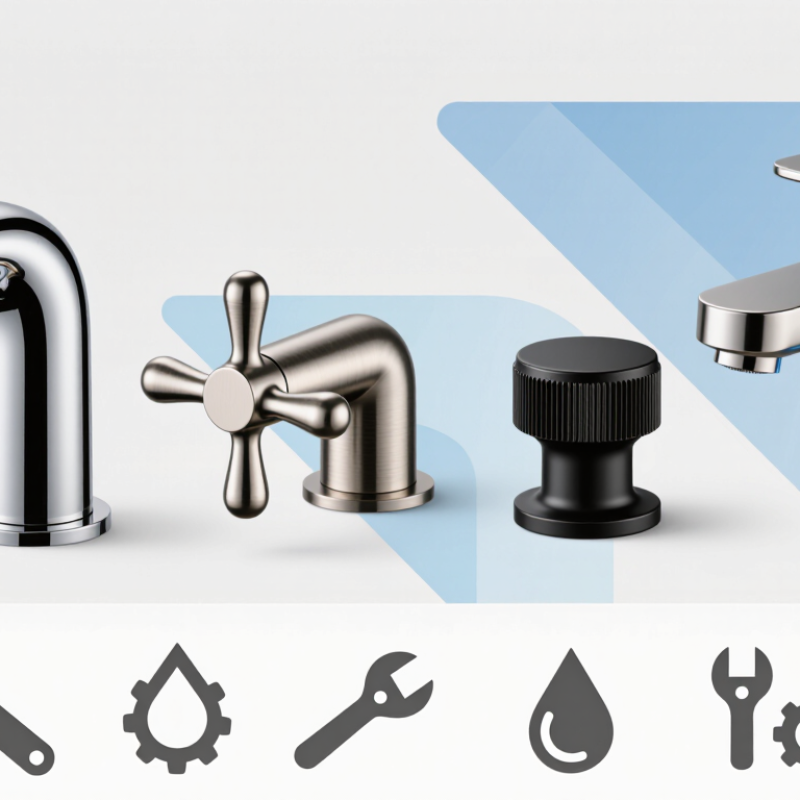
In 2026, a bulk faucet handle type is best defined by how it operates and fits—not by its finish alone.
Common categories include single-lever handles, paired hot-and-cold handles, and cross or knob handles.
For purchasing, record the valve or cartridge connection, stem dimensions, mounting position, and handle direction.
Two handles that look alike may not fit the same valve.
Small detail, big headache.
Bulk also describes consistent quantities and specifications, not a separate handle design. Buyers should group units by verified compatibility, material, finish, and replacement requirements.
The U.S. EPA’s WaterSense faucet specification sets a maximum flow rate of 1.5 gallons per minute for labeled bathroom faucets, compared with the federal 2.2-gpm baseline. That measures the faucet, not its handle, but it matters when selecting complete assemblies.
The specification is useful context, not proof that a handle controls water savings.
The U.S. Department of Energy’s plumbing-product standards provide the corresponding federal flow benchmark. Together, these technical references show why a bulk listing should distinguish handle-only parts from full faucets.
Request a dimensioned drawing and confirm the stem profile against a sample before ordering. I would still check the actual fit; catalog descriptions can be vague.
For large projects, label cartons by type and installation location, so crews do not mix left- and right-side controls.
Sources: U.S. EPA WaterSense Specification for lavatory faucets; U.S. Department of Energy plumbing-product standards.
Single-lever faucet handles suit high-volume projects because one movement adjusts both water flow and temperature. On a busy wash station, staff can move the lever with one hand, reducing fumbling during repeated use. The simple control also gives installers fewer separate handles to align. Less visual clutter. But “easy to use” depends on placement, grip, and the faucet’s internal design. A stiff cartridge can make even a well-positioned lever frustrating.
Tips: Test a sample handle before ordering in bulk. Check its travel, grip with wet hands, and compatibility with the faucet body. Confirm that replacement cartridges will be available.
For schools, hotels, and shared facilities, consistent handle operation can make maintenance and user training more straightforward. Compare the required handle clearance with nearby walls or sinks, especially where several fixtures sit close together. Ask suppliers for material and finish details, then inspect a sample for sharp edges or loose movement. A large order can magnify a small mismatch. One detail is easy to overlook: users may prefer different lever directions, so verify the intended orientation before installation.
In 2026, two-handle faucet designs remain a practical choice for bulk purchasing. They separate water flow from temperature adjustment, giving users more precise control. One handle manages hot water, while the other controls cold water. This layout feels familiar in kitchens, bathrooms, and utility spaces.
Ceramic cartridges usually offer smooth turning and better resistance to dripping. Quarter-turn handles can also reduce adjustment time during daily use. However, handle spacing matters. Narrow spacing may feel cramped, especially when users have wet or soapy hands. Buyers should check cartridge quality, mounting dimensions, connection sizes, and included hardware before placing a large order. Water pressure can also change the user experience. A well-designed handle cannot fix an unsuitable internal valve.
Tips: Test a sample before ordering in bulk. Turn both handles repeatedly, check for stiffness, and inspect the base for movement. Ask for material details and replacement cartridge availability. Small inconsistencies can become expensive across hundreds of units. Do not judge quality by weight alone. Heavier metal may feel substantial, but internal components matter more. Some buyers overlook this point. I would not. A design that looks excellent in a showroom may feel awkward after weeks of daily use. Allow room for that honest doubt.
Two-handle faucets use separate hot- and cold-water controls, allowing users to adjust flow and temperature independently. The chart compares common two-handle formats by their typical mounting-hole requirements: centerset and widespread bathroom faucets generally use three holes, while bridge and utility faucets commonly use two.
In 2026, bulk faucet handle selection depends on more than appearance. Cross, knob, and joystick designs create different experiences at the sink. Shape affects grip, control, cleaning, and long-term maintenance.
Cross handles provide clear leverage, especially when hands are wet or gloved. Their four arms are easy to recognize by touch. However, narrow arms may press into the fingers during repeated use.
Knob handles need less space and suit compact wash areas. A textured edge can improve grip, but smooth knobs often become slippery with soap residue. They also require more wrist rotation than many buyers expect.
Joystick handles support one-handed operation with a simple forward, backward, or side movement. They feel intuitive in kitchens and accessible washrooms. Their slim profile also reduces visual clutter.
Yet, loose internal cartridges can make the control feel vague, so buyers should request cycle testing before ordering large quantities. Check the handle’s stem, mounting fit, surface finish, and resistance to cleaning chemicals. Small details matter.
I have found that bulk samples reveal problems hidden in product photos. Try each handle with wet fingers. Test it while wearing work gloves. A balanced handle should move smoothly without wobbling. This is where preferences become practical evidence, not guesswork. In some projects, the most attractive option proved uncomfortable after repeated use. That result deserves attention.
Bulk faucet selection in 2026 is moving beyond finish and price. Touchless handles support cleaner workflows in clinics, restaurants, and busy restrooms. The CDC reports that improved hand hygiene can reduce respiratory illness by 16–21%. That makes sensor activation more than a convenience. It can reduce contact with wet, contaminated surfaces. Still, sensors need reliable batteries and easy manual overrides. A failed sensor during peak hours is not a small problem.
ADA-friendly handles should require limited gripping, twisting, or pinching. Lever designs usually provide better access than small cross handles. The 2010 ADA Standards require accessible operable parts to work with one hand and limited force. Commercial buyers should also review cycle ratings, valve durability, and replacement access. EPA WaterSense data shows that labeled bathroom faucets use no more than 1.5 gallons per minute. That can reduce water waste, but low flow may feel weak in high-use facilities. User testing matters.
Tips: Compare sensor response time under bright light and wet conditions. Check whether gloves trigger activation. Measure counter depth before ordering bulk quantities. One overlooked detail is sound. Loud valves can disturb quiet healthcare spaces. I would also test a sample for two weeks before a full purchase. Specs look convincing on paper, yet real maintenance often changes the decision.
Its operation and fit matter more than its finish. Common types include single-lever, paired hot-and-cold, cross, and knob handles.
Confirm the valve connection, stem dimensions, mounting position, and handle direction. Similar-looking handles may not fit the same valve.
No. It means ordering consistent quantities with verified specifications. Group parts by compatibility, material, finish, and replacement needs.
Request a dimensioned drawing and compare the stem with a sample. Label cartons by handle type and installation location. It helps.
No. Flow ratings apply to complete faucets, not handles alone. Some labeled bathroom faucets are rated at no more than 1.5 gallons per minute.
Lever handles often need less gripping and twisting than small cross handles. Check that controls can be operated with one hand and limited force.
Check sensor response under bright light, with wet hands, and while wearing gloves. Test battery access and manual override too. Sensors can fail.
Review cycle ratings, valve durability, replacement access, and noise. Try a sample for two weeks before ordering many units. Paper specs can mislead.
In 2026, a Bulk Faucet Handle is defined by its ability to support efficient installation, dependable performance, and consistent user control across high-volume residential, commercial, and institutional projects. Selection typically depends on handle configuration, material durability, ease of maintenance, accessibility, and compatibility with the faucet system. Single-lever handles remain a practical choice because they allow users to control water flow and temperature with one motion, helping simplify installation and daily operation.
Two-handle designs provide separate control over hot and cold water, making them suitable for settings where precise adjustment is important. Cross and knob handles offer familiar forms and reliable grip, while joystick styles create a modern, user-friendly experience with smooth directional control. Smart and specialty options expand functionality through touchless activation, accessible ADA-conscious designs, and heavy-duty commercial features. By comparing usability, project requirements, and long-term reliability, buyers can choose the most suitable Bulk Faucet Handle type for 2026 applications.
