China’s faucet market is broad, practical, and increasingly design-conscious. Buyers compare handle movement, cartridge quality, cleaning effort, and installation space. This guide examines the leading Faucet Handle Types used in Chinese homes, hotels, apartments, and commercial projects.
Richard Trethewey, a respected plumbing expert, offers a useful principle: “The best plumbing is the plumbing you don’t see.” His observation applies to faucet handles, too. A reliable handle should feel solid, move smoothly, and avoid unnecessary visual clutter. Single-lever handles remain popular because they control temperature and flow with one hand. They suit compact kitchen sinks and busy bathroom counters. Double-handle faucets provide more precise hot and cold adjustment. They also support traditional interiors and wider basin layouts.
Cross handles bring a familiar, decorative appearance. Lever handles feel easier for children, older users, and people with limited grip strength. Joystick designs create a modern look, but some users may need time to control them accurately. Touchless models reduce contact, although sensors require careful placement and dependable batteries or power connections.
Ceramic cartridges matter. So do finish durability and spare-part availability. Chinese manufacturers often offer chrome, brushed nickel, matte black, and PVD finishes. Still, appearance can mislead. A beautiful handle may loosen after repeated use. That assumption needs testing.
The right choice depends on water pressure, user habits, sink size, and maintenance access. There is no universal winner. A practical evaluation should include real turning force, wet-hand control, installation clearance, and long-term service support.
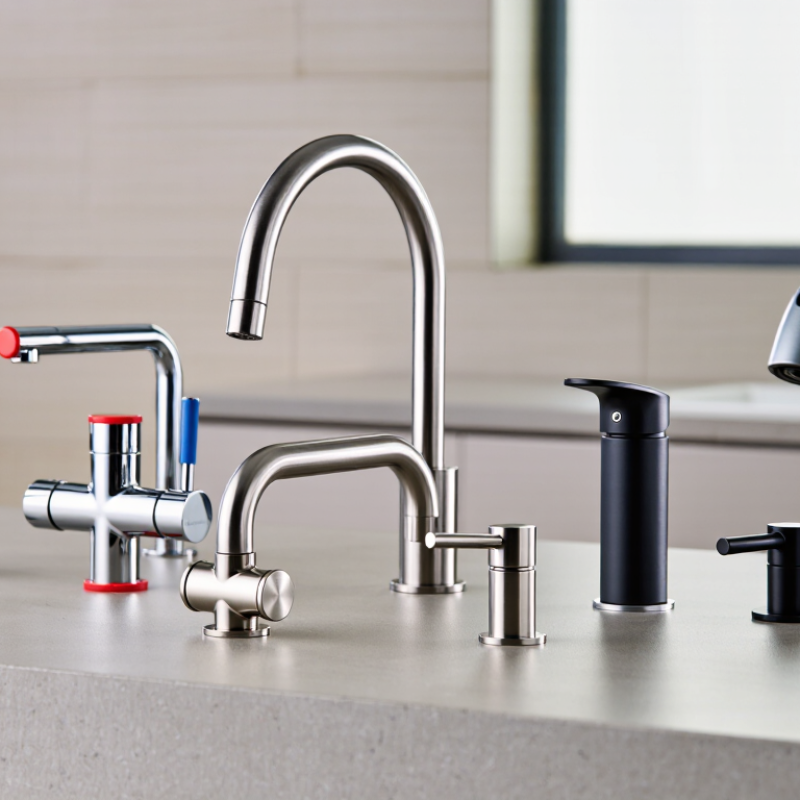
A faucet handle is the user’s control for water flow, temperature, or both. Its type matters because fingers, wrists, children, and older users interact with it daily. Single-lever handles adjust temperature with one movement. They suit compact Chinese bathrooms and kitchens. Two-handle designs separate hot and cold water. They offer precise adjustment, but need two hands. Cross handles provide familiar visual feedback. They can feel slow when hands are wet. Thermostatic handles hold a selected temperature. They add comfort near showers, yet their cartridges require careful servicing.
The U.S. EPA WaterSense specification limits labeled bathroom faucets to 1.5 gallons per minute, 30% below the federal 2.2-gallon standard. The WaterSense 2023 Accomplishments Report says labeled products saved 7.5 trillion gallons and 152 billion dollars cumulatively. EPA also estimates bathroom faucets can save an average family about 700 gallons yearly. These figures measure products, not handles alone. Still, they show why handle choice needs valve and aerator evaluation. A smooth lever cannot compensate for a leaking cartridge.
For Chinese buyers, ceramic-cartridge single levers often balance price, space, and simple cleaning. Touchless controls may improve hygiene, but batteries and sensors add failure points. Market forecasts can suggest demand; they cannot predict a cramped sink or a child’s grip. On a showroom counter, every handle feels easy. At home, wet fingers expose the difference. I would test movement, temperature markings, cartridge warranty, and replacement access before choosing. The practical winner is often less glamorous.
In China, faucet handles are usually classified by control method, cartridge structure, installation, and use scenario. The main retail groups are single-lever, dual-handle, cross-handle, and sensor-operated designs. Single-lever models combine flow and temperature in one movement. Dual-handle models separate hot and cold water. Cross handles remain common in decorative bathroom settings.
Chinese procurement catalogs often add wall-mounted, deck-mounted, and concealed categories. These describe installation, not handle operation. Mixing both systems can confuse buyers.
A single-lever faucet may be deck-mounted, while a dual-handle model may be wall-mounted.
The Ministry of Water Resources reported 90.9 billion cubic meters of domestic water use in China’s China Water Resources Bulletin 2023. This strengthens the case for precise flow control, but it does not prove one handle type is best.
In practical inspections, single-lever handles are quicker beside a kitchen sink. Dual handles can provide finer temperature adjustment. Sensor handles reduce touch points, yet batteries and cleaning routines need checking.
China’s GB 18145-2014 standard focuses on ceramic cartridge faucets, sealing, durability, and performance. It does not rank handle styles.
National Bureau of Statistics data in China Statistical Yearbook 2024 placed China’s 2023 urbanization rate at 66.16%. More urban homes mean more varied bathroom layouts.
However, catalog photos rarely show handle resistance, cartridge life, or backsplash clearance. That is the weak point. A reliable specification should record operation, mounting, water efficiency, and maintenance access together. Wet-hand testing still matters.
What Are the Main Faucet Handle Types Used in China?
China’s faucet market mainly uses single-lever, double-handle, cross-handle, and sensor-operated designs. Single-lever faucets dominate many modern kitchens and bathrooms. Users can adjust temperature with one hand. This suits compact apartments and busy household routines.
China’s National Bureau of Statistics reported an urbanization rate of 66.16% at the end of 2023. This supports continued demand for apartment renovation and space-efficient fittings. Industry analyses from Mordor Intelligence also identify residential construction, remodeling, and water-efficiency as key drivers in China’s faucet market. However, public reports rarely publish reliable market shares for each handle type. That gap matters. Supplier claims should not replace verified field research.
Double-handle faucets remain common in traditional bathrooms, rental properties, and renovation projects. They offer separate hot and cold controls, but temperature adjustment takes longer. Cross handles provide stronger visual cues and easier grip for some older users. Touchless handles use sensors, mostly in commercial washrooms and premium residential projects. Their installation needs stable power and careful maintenance.
Tips: Match the handle to the user and installation site. Choose a single lever for small kitchens. Consider double handles when independent temperature control matters. Test the cartridge movement before purchase. A smooth handle feels minor, but it often reveals better internal workmanship.
Single-lever and double-handle faucets are the main handle configurations used in Chinese residential and commercial plumbing. Knob, cross, and joystick handles are specific control styles rather than separate market-share categories. The values show the typical number of control handles in each configuration and do not represent brand or company sales data.
What Are the Top Faucet Handle Types in China?
Chinese faucet handles differ in control, comfort, and maintenance. Single-lever handles remain common in kitchens and bathrooms. They adjust water volume and temperature with one hand. That is practical. A user can lift the lever with a wet palm or wrist. Their main weakness is accidental temperature changes, especially near small children. A clear center position helps, but not every model provides one.
Double-handle faucets separate hot and cold water controls. This arrangement offers more precise temperature adjustment. It also suits households with different water pressure levels. However, adjusting both handles takes longer during daily washing. Quarter-turn ceramic handles feel firm and usually need less movement. Their performance depends on cartridge quality, sealing, and correct installation. Quality still varies.
Cross-shaped handles provide strong grip for older users or people with limited finger strength. Joystick handles offer smooth control, but they may feel slippery when wet. For homes with frequent cooking, a single lever is often the most efficient choice. For traditional bathrooms, double handles can provide better visual control. Installers should check thread sizes, mounting space, and water-line direction before fitting. A low-cost handle may look attractive, yet loose movement can develop quickly. I would not judge function by appearance alone. Small details, such as a textured grip and a stable base, often matter more.
| Handle Type | Basic Operating Method | Typical Internal Mechanism | Temperature and Flow Control | Functional Advantages | Limitations | Common Applications in China |
|---|---|---|---|---|---|---|
| Single-Lever Handle | One lever moves up or down for flow and left or right for temperature. | Usually a ceramic disc cartridge. | Fast, one-handed adjustment of both water volume and temperature. | Easy to operate, compact, and generally offers good control with relatively few moving parts. | The selected temperature may change if the water pressure or supply temperature fluctuates. | Very common in residential kitchen, bathroom, and basin installations. |
| Double-Handle Lever | Separate handles control hot and cold water independently. | Two ceramic cartridges or compression-style valves, depending on the design. | Temperature is set by balancing the hot and cold handles; flow is controlled at each valve. | Offers independent adjustment and can continue operating on one side during some service conditions. | Requires both hands or repeated adjustment and usually takes longer to reach the desired temperature. | Used in traditional bathroom, basin, utility, and selected kitchen designs. |
| Cross-Handle | A cross-shaped handle is turned clockwise or counterclockwise to open or close a valve. | Ceramic valve or compression valve, depending on the product construction. | Usually controls one water supply per handle; mixing requires separate hot and cold valves. | Provides a familiar grip and suits classic or traditional bathroom styling. | Needs more rotation than a quarter-turn lever in some designs and is less convenient for users with limited hand strength. | Found mainly in traditional-style residential bathrooms and renovation projects. |
| Joystick Handle | A short central control tilts or pivots in different directions. | Commonly based on a ceramic cartridge or compact mixing cartridge. | Combines flow and temperature adjustment in a small central control area. | Compact appearance, convenient one-handed use, and suitable for contemporary basin designs. | The control direction may be less intuitive for first-time users, and the compact cartridge can be sensitive to debris. | Used in modern residential bathrooms, hotel-style washrooms, and space-efficient basins. |
| Thermostatic Handle | A temperature dial sets the target temperature while a separate control manages water flow. | Thermostatic mixing cartridge with a temperature-sensitive regulating element. | Maintains a more stable outlet temperature when inlet pressure and temperature remain within the operating range. | Improves temperature consistency and can reduce the risk of sudden hot-water changes when correctly installed. | Costs more, needs correct hot-and-cold connections, and may require periodic filter or cartridge maintenance. | Commonly selected for showers, family bathrooms, and installations where temperature stability is important. |
| Sensor or Touchless Control | An infrared sensor activates water when hands are detected; temperature is preset or adjusted separately. | Electronic sensor, solenoid valve, control module, and an external power source or battery. | Usually provides automatic on/off flow; temperature is commonly set with a manual side control or mixing valve. | Reduces hand contact, can limit unnecessary running water, and is convenient in high-traffic washrooms. | Depends on batteries or electricity, may activate incorrectly if the sensor is obstructed, and requires electronic maintenance. | Used in commercial washrooms, healthcare facilities, transport areas, offices, and some modern homes. |
| Push-Button Handle | Pressing the button starts or stops the water; the button may return automatically after a preset period. | Mechanical timed valve or push-button cartridge. | Primarily controls flow; temperature is often preset or controlled through a separate mixing device. | Simple operation and automatic shutoff can help control water use in shared facilities. | Limited user control over running time and temperature; the valve may need servicing after heavy use. | Suitable for public washrooms, schools, service areas, and other high-use locations. |
Note: Actual performance depends on water pressure, inlet temperature, cartridge quality, filtration, installation accuracy, and local plumbing conditions.
Choosing the right faucet handle in China starts with the installation environment, not appearance alone. Lever handles suit kitchens because they work easily with wet or soapy hands. Cross handles fit traditional bathrooms and allow precise hot-water adjustment. Knob handles need less space, but some users find them difficult to turn. Sensor handles offer touch-free control, although they require reliable power and maintenance.
During supplier discussions, ask about the cartridge, handle material, surface coating, and tested service life. Zinc alloy can feel solid, while stainless steel usually offers better corrosion resistance. Plastic handles may reduce cost, but their strength varies greatly. Request samples before placing a large order. Check for wobbling, sharp edges, uneven plating, and loose screws. Small details matter.
I once underestimated cabinet clearance. The selected lever looked practical, yet it struck the backsplash during operation. That mistake changed my inspection checklist. Measure the handle’s turning radius, basin distance, and user reach. For commercial projects, choose simple shapes with replaceable internal parts. For residential projects, comfort and cleaning effort may matter more than a low unit price. Buyers should also confirm water-pressure requirements and local testing documents. Specifications can look complete, but real samples sometimes tell a different story.
It controls water flow, temperature, or both. A single lever combines these actions in one movement. Wet fingers can change the experience.
A single-lever design often saves space and works quickly. It can be operated with one hand near a sink. A leaking cartridge still wastes water.
Single-lever handles adjust flow and temperature together. Dual-handle models separate hot and cold water. They offer precise adjustment but usually need two hands.
Cross handles provide familiar visual feedback and decorative appeal. They may feel slow when hands are wet. Looks are not everything.
They maintain a selected water temperature, improving shower comfort. Their cartridges need careful servicing and accessible replacement. Comfort can hide maintenance problems.
Touchless controls reduce contact with the handle. Batteries and sensors create additional failure points. Check battery access, cleaning needs, and sensor response before buying.
Catalogs classify them by operation, cartridge structure, installation, and use. Single-lever, dual-handle, cross-handle, and sensor-operated designs describe control methods. Wall-mounted, deck-mounted, and concealed labels describe installation. These categories can overlap.
Test handle resistance with wet fingers, not only dry hands. Check temperature markings, cartridge warranty, mounting space, and replacement access. Inspect backsplash clearance around the handle. Showroom movement can mislead.
No. Water efficiency also depends on the valve, aerator, and leakage control. A smooth lever cannot repair a worn cartridge. The handle is only one part.
Faucet Handle Types play an important role in determining how easily users can control water flow, temperature, and overall bathroom or kitchen comfort. A faucet handle is the part used to operate the valve, and its design influences installation, maintenance, appearance, and user experience. In China, faucet handles can be classified by operating method, structure, installation position, and material. Common options include single-lever, double-handle, cross, knob, push-button, and sensor-assisted designs.
Each type offers different advantages. Single-lever handles provide simple control and are suitable for modern spaces, while double-handle designs allow more precise adjustment of hot and cold water. Cross and knob handles may offer a traditional appearance, whereas push-button and sensor-assisted options can improve convenience and hygiene. When choosing among Faucet Handle Types, buyers should consider the intended application, valve compatibility, installation space, durability, ease of cleaning, water-saving needs, and preferred style. A suitable handle should balance reliable performance, comfortable operation, and long-term maintenance requirements.
