Shower Faucet Handles may look like small finishing details, but they shape how a shower feels every day. A smooth lever can be easier to adjust with wet hands. A round knob may suit a traditional bathroom, though it can be harder to grip. The best choice depends on comfort, control, valve compatibility, and the people using the shower.
This guide compares common handle types, including single-lever, dual-handle, cross, knob, and thermostatic controls. It also explains how handles affect temperature adjustment and installation choices. A handle’s appearance matters, but so does its feel. Imagine turning it with soapy fingers or adjusting it when the bathroom is cold. Small details become noticeable.
A practical plumbing principle is: “Choose a handle you can control comfortably, not just one that matches the tile.” That is guidance, not a quotation from a named expert; no verified expert statement was provided. This distinction matters. Reliable buying advice should separate sourced expertise from general recommendations.
Some choices may still feel uncertain. A sleek design can be less comfortable than expected, and compatibility is not always obvious from a product photo. Check the faucet valve requirements before buying. The sections ahead will help you compare function, style, and everyday usability before choosing Shower Faucet Handles for your bathroom.
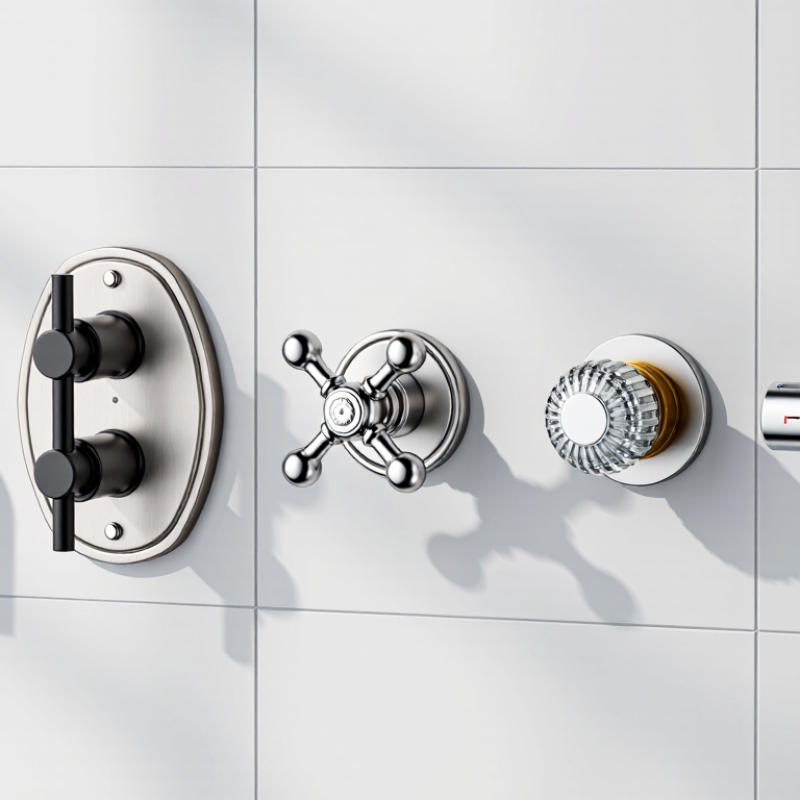
A shower faucet handle is the part you touch to start, stop, and adjust the water. Behind the wall, it connects to a valve that regulates flow and mixes hot and cold water. Depending on the design, one handle may control both temperature and volume, while a two-handle setup separates those adjustments. Some showers have a separate diverter to redirect water between the showerhead and tub spout. The handle does not always control every function.
Its movement can affect comfort and safety. A pressure-balancing valve helps limit sudden temperature changes when water pressure shifts elsewhere in the home. A thermostatic valve lets users set a target temperature, though its operation varies by model. The U.S. EPA’s WaterSense showerhead specification sets a maximum flow rate of 2.0 gallons per minute, compared with the federal standard of 2.5 gallons per minute. That figure describes the showerhead, not the handle; the valve and showerhead together shape the actual experience. Small distinction. It matters.
Shower faucet handles are often classified by how they control water, rather than by their shape. A single-handle design uses one lever or knob to adjust flow and temperature together. Move it to start the water, then turn it toward hot or cold. This saves space, though small movements can cause noticeable temperature changes. Small distinction.
Two-handle faucets use separate controls for hot and cold water. They let users fine-tune each side, but balancing the temperature may take longer. With wet hands, similar knobs can be difficult to tell apart. Thermostatic handles work differently: one control sets the temperature, while another adjusts water volume. A thermostat helps maintain the selected temperature as supply conditions shift. Pressure-balancing designs respond to changes in hot- or cold-water pressure. They can reduce sudden temperature swings, but may not offer an exact temperature setting.
Feel matters. Check a handle’s travel, grip, and markings, especially if children or older adults use the shower. A showroom test can mislead; real use includes soap, steam, and rushed mornings. Before replacing a handle, check that it matches the installed valve and control system.
The main types of shower faucet handles are single-handle levers, separate hot-and-cold handles, knobs, and cross handles. A single lever controls both water flow and temperature, often by moving up and turning side to side. It is convenient when one hand is occupied, but small adjustments can feel less precise on some models.
Two-handle faucets use separate controls for hot and cold water. They offer direct adjustment, though finding a comfortable temperature may take longer. Knob handles turn to regulate water, while cross handles have four projecting arms that can be easier to grip with wet hands. Simple, but not always.
Some showers use a thermostatic control handle alongside a flow control. The thermostatic handle helps maintain a selected temperature as water pressure changes, while the other control starts or adjusts the spray. These controls can be useful for households with different comfort needs, but compatibility depends on the shower valve.
Handle shape is only part of the choice. Check the existing valve type and mounting arrangement before replacing a handle; similar-looking parts may not fit. Also consider grip strength and whether the handle is easy to turn with wet fingers. A stylish knob may look right, yet prove awkward in daily use. There is no universal best type.
Shower faucet setups commonly have one, two, or three handles. This chart compares the number of handles in each configuration; it does not indicate how popular each type is.
A shower faucet handle is more than a style choice. Its shape affects how easily you can grip it, apply pressure, and adjust the water. A single lever usually needs only one hand. Its longer arm gives your fingers leverage, which can help when hands are soapy or slippery. Small movements may change the temperature quickly, though, so adjust gently.
Round knobs and cross handles call for a twisting motion. Their broader edges can offer a steady hold, but smooth, compact knobs may be harder to turn with wet fingers. Cross handles provide several points to grip. Still, comfort depends on the person and the handle’s size, surface, and placement. The valve mechanism also affects how precisely water flow and temperature respond; shape is not the whole story. A handle that looks easy to use can feel awkward once installed.
Tips: If possible, test the handle with damp hands before choosing. Check that you can turn it without straining your wrist. Keep children’s reach and the shower’s temperature controls in mind, too. A little hesitation at the display is worth taking seriously.
| Handle Type | Typical Shape and Movement | Grip Characteristics | Water Control | Useful Considerations |
|---|---|---|---|---|
| Lever | A straight or gently curved arm that moves up and down, or rotates, depending on the valve. | Easy to grasp with the whole hand; can often be operated with a palm or forearm when hand strength or dexterity is limited. | Movement is usually simple to see and repeat. On a single-control valve, the lever commonly adjusts both flow and temperature; on a separate-control valve, it may control only one. | Check the valve’s movement and temperature markings. A lever’s appearance alone does not identify whether it controls temperature, flow, or both. |
| Round knob | A circular knob that turns clockwise or counterclockwise. | Provides a familiar grasp, but usually requires pinching or wrapping the fingers around the knob. Small or smooth knobs may be harder to hold with wet hands. | Turning direction and distance determine the setting. The relationship between knob position and water temperature varies by valve design. | Look for a textured edge or a sufficiently large grasping surface if a more secure grip is important. |
| Cross handle | A central hub with two or more projecting arms; turns like a knob. | The arms offer places to hook or hold fingers. They may be easier to grip than a smooth round knob, although the arms can still require wrist rotation. | Typically turns a valve stem to adjust flow or temperature. Some showers use separate cross handles for hot and cold water. | Use the hot- and cold-water markings and follow the fixture’s instructions. Separate controls require balancing the two settings. |
| Paddle or wing handle | A broad, flat projection that turns or pivots, depending on the valve mechanism. | The wider surface can be pressed with a hand or palm rather than grasped tightly. | Can offer a clear visual reference for position, but the amount of movement and the resulting water setting depend on the valve. | Confirm that the paddle clears nearby walls, shelves, and other fixtures throughout its operating range. |
| Single-handle control | Usually a lever or compact knob that moves in one or more directions. | One control can be convenient when reaching or using both hands is difficult; grip comfort depends on the handle’s size and shape. | Many designs use one movement for flow and another for temperature, but the operating pattern is model-specific. | Read the valve instructions before use or replacement. A handle must match the compatible valve cartridge and control layout. |
| Two-handle control | Two separate knobs, cross handles, or levers, generally used for hot and cold water. | Each handle can be adjusted independently. The effort required depends on its shape, surface, and valve condition. | Temperature is set by balancing the hot and cold controls; flow may be adjusted through one or both handles, depending on the system. | Separate controls can provide independent adjustment but may take more steps to reach a preferred temperature. |
| Selection tip: Handle shape affects how it feels to grip, while the valve mechanism determines how the handle changes water flow and temperature. Confirm valve compatibility, operating direction, and accessibility before choosing a replacement. | ||||
What Are the Top Types of Shower Faucet Handles?
When choosing a shower faucet handle, start with how it feels in a wet hand. A single lever is easy to adjust with one hand, while separate hot and cold knobs offer more deliberate control. Cross handles can be easier to grasp than small, smooth knobs, but they may take more effort to turn. Grip matters. If possible, test the handle with damp hands before buying.
Check compatibility with the existing valve, too. A handle that looks right may not fit the valve behind the wall, and replacing that valve can add time and cost. For accessible use, the U.S. Access Board’s 2010 ADA Standards specify that controls should work with one hand, without tight grasping, pinching, or wrist twisting; operating force is limited to 5 pounds. These details are useful even in homes without accessibility requirements.
Water use is another factor, though the handle itself does not determine flow. The U.S. EPA’s WaterSense showerhead specification sets a maximum flow rate of 2.0 gallons per minute, compared with 2.5 gallons for standard showerheads, while requiring at least 20% water savings. Pairing a suitable handle with a compatible, efficient showerhead can improve everyday use. Still, published figures cannot tell you whether a lever feels slippery or awkward in your own shower. Test the motion, and check whether replacement parts are readily available.
It starts, stops, and adjusts water through a valve behind the wall. Depending on the design, it may control temperature, flow, or both.
No. Some showers use a separate diverter to send water to the showerhead or tub spout. Small distinction. It matters when replacing parts.
One lever usually adjusts temperature and flow with one hand. Small movements can change the temperature quickly, so turn it gently.
Cross handles offer several places to hold, while smooth, compact knobs can be harder to turn with wet fingers. Grip matters. Comfort still depends on the person and handle placement.
Check that it matches the valve behind the wall. A handle may look suitable but not fit, and replacing the valve can add time and cost.
Try turning it with damp hands, if possible. Check that your wrist feels comfortable and that the handle does not require a tight grip. Test it wet.
A pressure-balancing valve can help limit temperature changes when water pressure shifts elsewhere in the home. A thermostatic valve may let you set a target temperature, but operation varies by model.
No. The handle does not set the showerhead’s flow rating. A compatible, efficient showerhead can reduce water use, but published figures cannot tell you whether the handle feels slippery or awkward. I still find labels confusing.
Shower Faucet Handles control how water flows from the shower and, depending on the faucet design, how its temperature is adjusted. They are commonly classified by operation: single-handle controls combine flow and temperature adjustment, while separate-handle designs use different controls for functions such as hot and cold water. Other mechanisms may allow users to switch between shower outlets or fine-tune water delivery.
Handle types also vary in shape and feel. Lever, knob, and cross-style designs offer different levels of grip and ease of movement, especially when hands are wet. When choosing a handle, consider its compatibility with the existing faucet, the way it operates, comfort and accessibility, durability, and how easily it can be cleaned. The best option balances dependable water control with a shape and style suited to the shower and its users.
